
Understanding Galvanic Skin Response (GSR): A Gateway to Emotion and Physiology
Galvanic Skin Response, often referred to as GSR or Electrodermal Activity (EDA), is a physiological signal that reflects changes in the electrical properties of the skin. These changes are caused by variations in sweat gland activity, which is directly influenced by the autonomic nervous system (ANS). Since GSR responds to emotional arousal, stress, and cognitive effort, it offers a non-invasive window into the internal state of the human body. This has made it a valuable signal in fields ranging from neuroscience and psychology to human-computer interaction and healthcare.
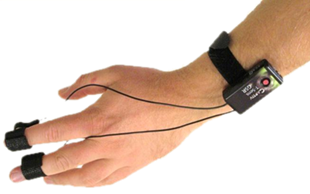
Historically, the concept of GSR emerged in the late 19th century when early researchers like Féré and Vigouroux noticed that emotional stimuli could alter skin resistance. Tarchanoff later expanded on this by observing natural variations in skin potential. Carl Jung recognized the potential of GSR to reveal unconscious emotional processes, and by the mid-20th century, Darrow had established its connection to sweat gland activity. With the rise of wearable technology in recent years, GSR measurement has become more accessible and widely used.

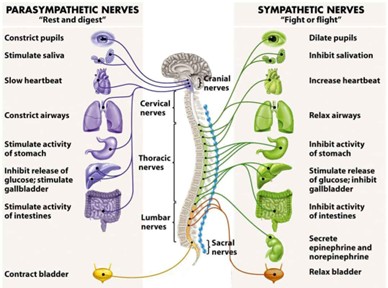
From a physiological standpoint, GSR is tightly linked to the sympathetic branch of the autonomic nervous system. Emotional and cognitive stimuli, such as stress, fear, or excitement, activate eccrine sweat glands, particularly those in the palms, soles, and forehead. As these glands release moisture, the hydration of the outer skin layer, or stratum corneum, decreases skin resistance and allows for increased conductivity.
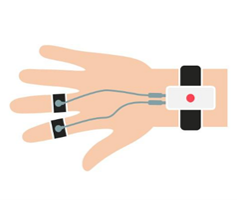
To measure GSR accurately, several techniques and instruments are available. Exosomatic methods, which apply external currents (either direct or alternating), are the most commonly used. DC methods are simple but can be affected by skin hydration and temperature, while AC methods offer more stability for long-term measurements. Endosomatic techniques, which measure the skin’s natural electrical potential, are less intrusive but more sensitive to noise. The choice of electrode, such as silver-silver chloride for high signal quality or conductive fabric for comfort, and the precise placement on sweat-rich areas are essential factors for data reliability.
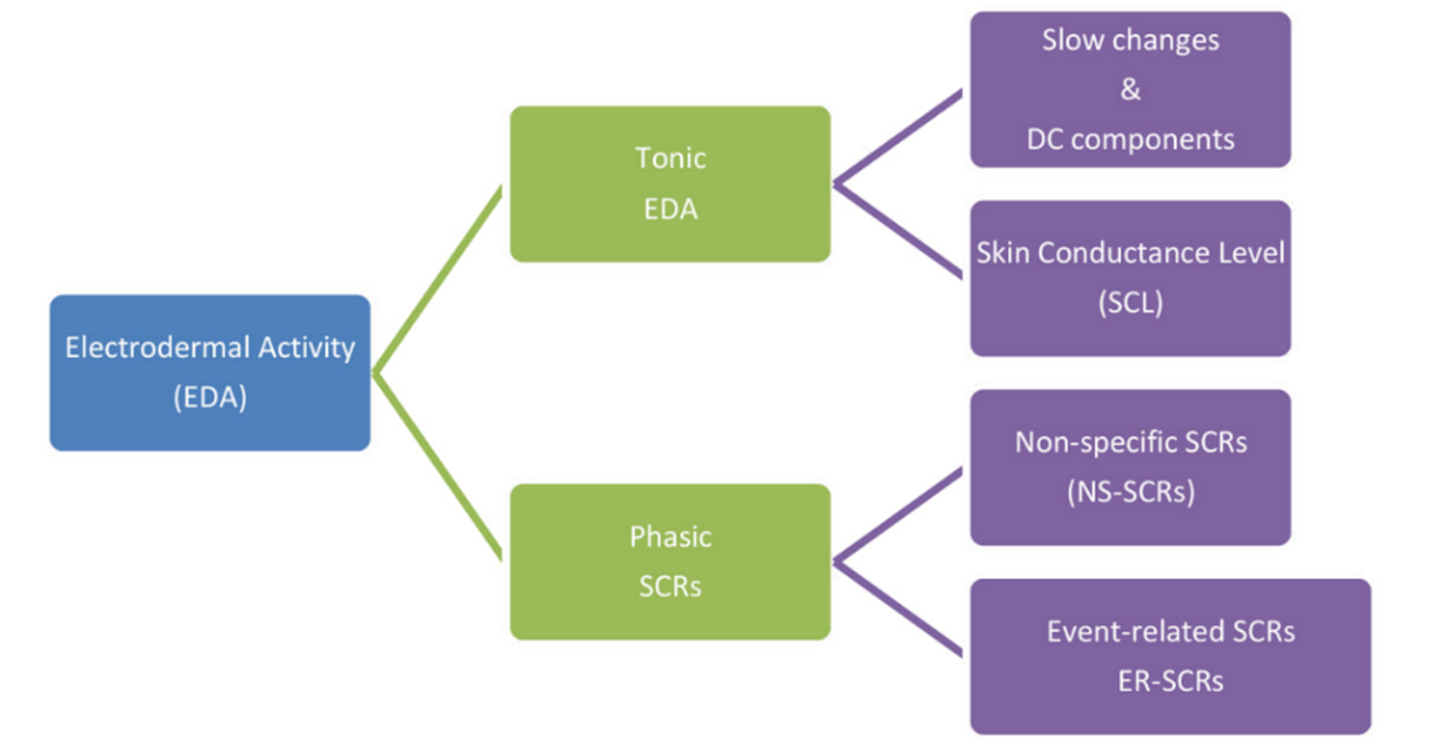
Despite advances in instrumentation, GSR measurements are still subject to various challenges. Motion artifacts, environmental conditions like humidity or temperature, and individual differences such as age and gender can all affect the signal. The processing of GSR signals involves filtering and decomposing them into two main components: tonic and phasic. The tonic component represents slow, baseline shifts in conductance associated with general arousal levels, while the phasic component captures rapid, stimulus-driven responses. For instance, emotional reactions typically produce sharp increases in skin conductance within a few seconds after a stimulus, which are classified as skin conductance responses (SCRs).
Filtering plays a critical role in GSR analysis. Since raw signals are often contaminated by noise or movement, filters like the Butterworth filter are used to extract meaningful information. For example, a low-pass filter at 3 Hz is commonly used to isolate the phasic component, while a lower cutoff around 0.1 Hz helps retain the tonic baseline.
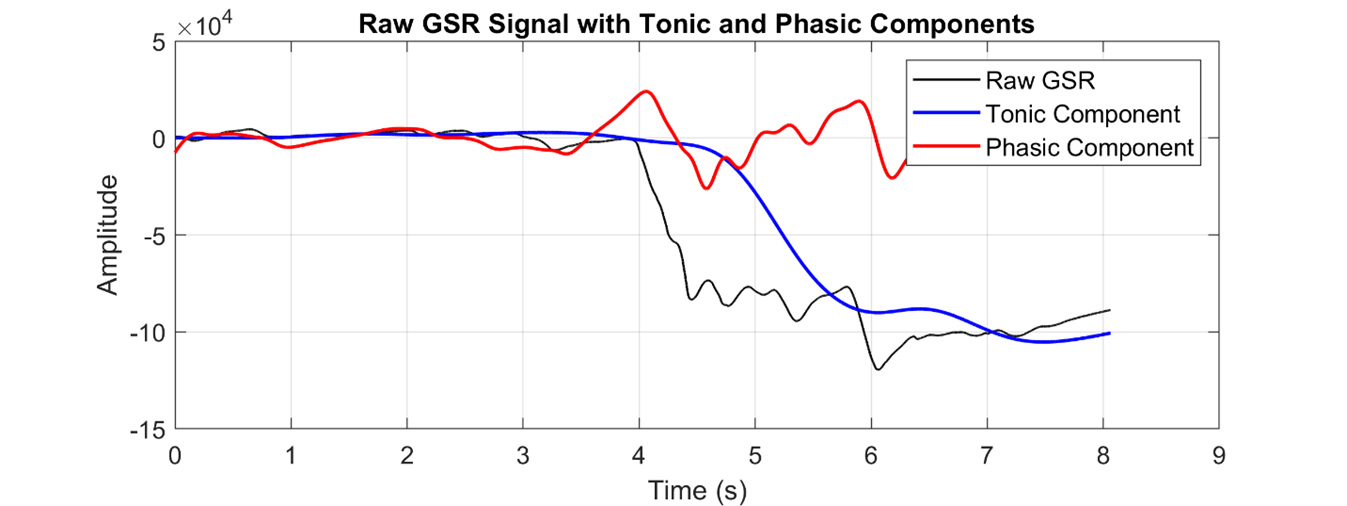
After preprocessing, researchers extract specific features from the GSR signal. These include the overall conductance level, peak amplitude and latency, rate and number of SCRs, and the dynamic range of the signal. Such features allow for quantifying emotional and cognitive states with reasonable precision.
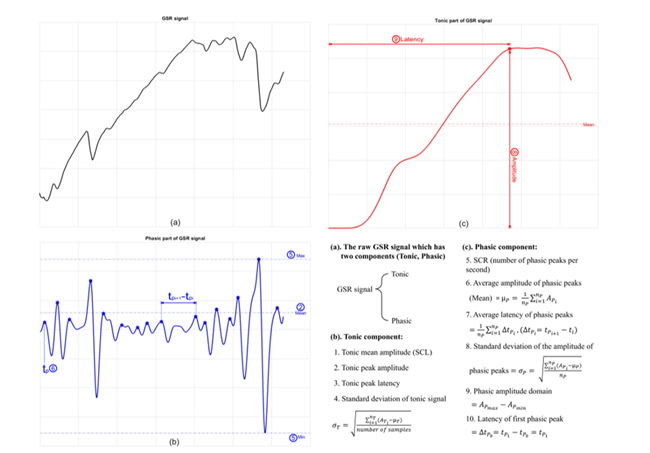
The applications of GSR are as diverse as they are impactful. In psychology, it is used to monitor emotional responses and anxiety levels. In medicine, GSR supports research into pain perception, sleep disorders, and wearable health monitoring. Meanwhile, in emerging technologies, it plays a role in emotion recognition for AI systems, forensic analysis, and sports science.
In conclusion, the Galvanic Skin Response offers a rich and dynamic signal for understanding the connection between the body and the mind. By combining historical insights, physiological knowledge, advanced instrumentation, and modern data analysis, GSR remains a vital tool in both research and applied sciences.
Author: Amirhossein Maddah